
Specialize in Compression molds
Specialize in Compression molds
Bulk Molding Compound (BMC) has become an important engineering material for producing high-performance composite components that require excellent strength, dimensional stability, electrical insulation, and heat resistance. From automotive parts and electrical housings to industrial equipment components, BMC molding provides manufacturers with an efficient solution for producing complex-shaped products with consistent quality.
However, achieving reliable BMC molding performance depends heavily on the quality of the tooling. A precision-engineered BMC mold ensures accurate cavity dimensions, stable material flow, uniform curing, excellent surface finish, and long-term production reliability.
At MDC, we specialize in manufacturing customized BMC mould and BMC tooling solutions for global customers. Our engineering team combines advanced mold design, precision machining, surface finishing, and compression molding experience to deliver reliable tools for automotive, electrical, industrial, and composite applications.
Whether you need a prototype BMC tool or high-volume production tooling, MDC provides complete solutions from initial design analysis and mold development to trial molding and final production support.
A BMC mold is a precision compression molding tool specifically designed for processing Bulk Molding Compound materials. The mold consists of accurately machined cavities, heating systems, guiding components, ejector mechanisms, and other functional structures required to form composite parts under controlled pressure and temperature.
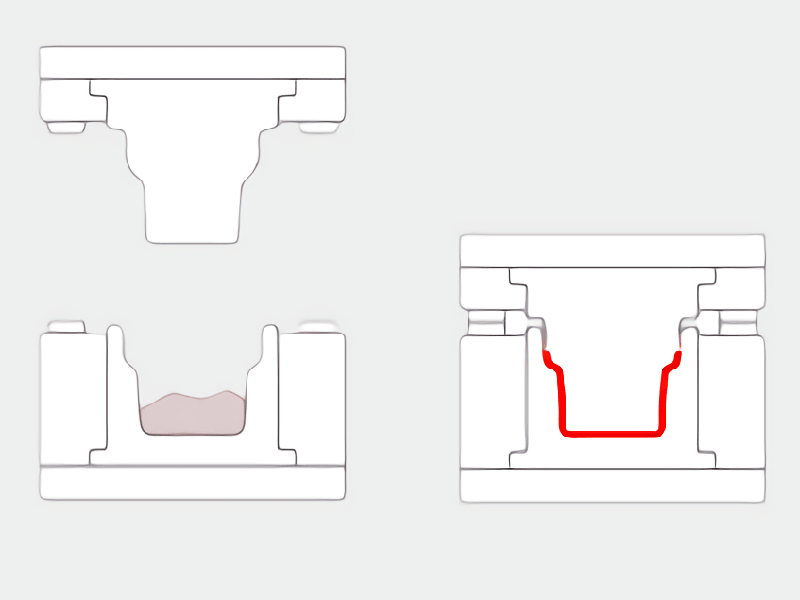
Unlike traditional plastic injection molds, BMC molds operate under compression molding conditions. The material is placed into the heated cavity, compressed under controlled pressure, and cured to form a finished component with excellent mechanical and thermal properties.
Because BMC materials contain chopped glass fibers, resin systems, fillers, and additives, the mold design must carefully consider material flow behavior, fiber distribution, curing characteristics, and demolding requirements.
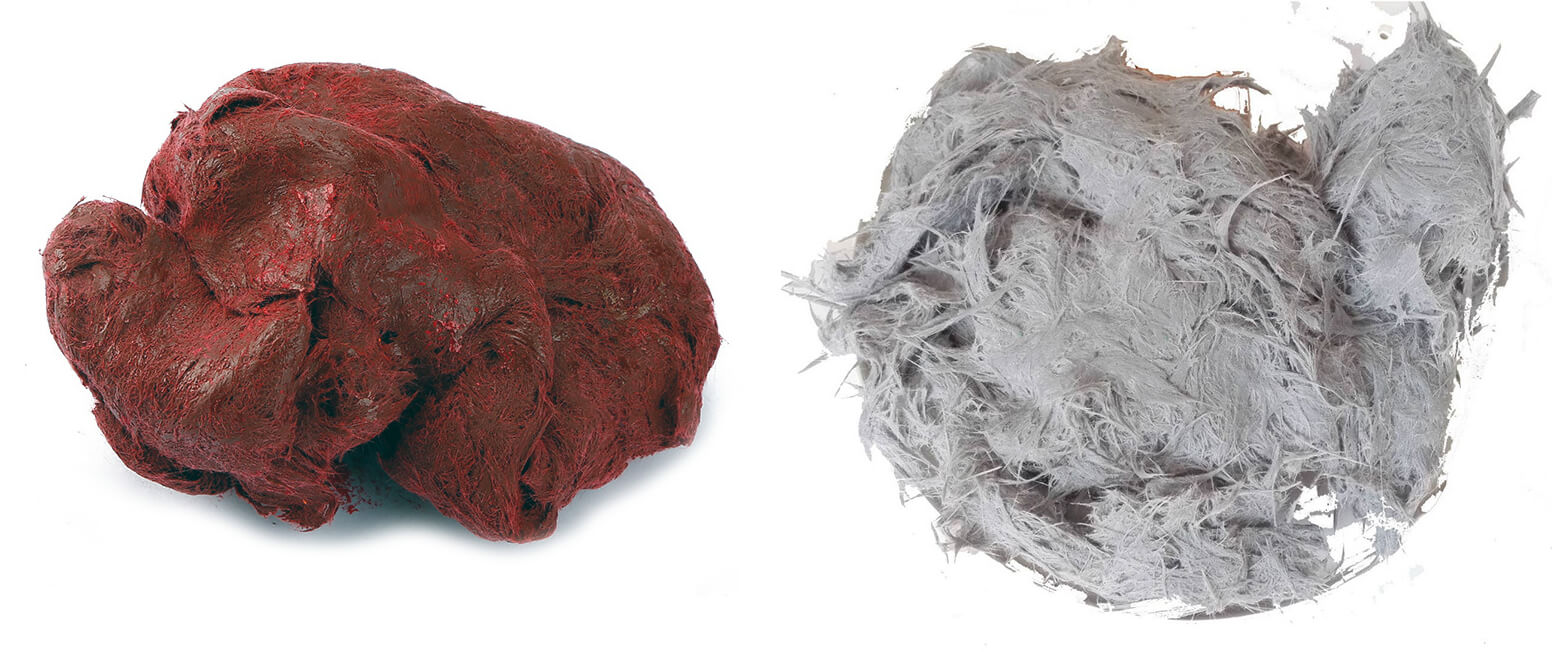
BMC molding is a thermoset composite manufacturing process that uses heat and pressure to transform Bulk Molding Compound into finished components. The process is widely used because it provides excellent dimensional accuracy, high production efficiency, and repeatable part quality.
During the molding cycle, the BMC material flows inside the cavity while heat activates the resin curing reaction. The mold must maintain accurate temperature distribution and pressure control to achieve consistent product performance.
The performance of BMC molded parts depends directly on the precision and engineering quality of the mold. Even small tooling problems can result in dimensional variation, surface defects, incomplete filling, excessive flash, or reduced mechanical performance.
A high-quality BMC tooling system provides:
For high-volume BMC production, the mold is not simply a forming tool. It is a critical production asset that directly affects manufacturing efficiency, product reliability, and overall production cost.
Due to its excellent electrical insulation, heat resistance, corrosion resistance, and dimensional stability, BMC is widely used in industries requiring reliable composite components. Precision BMC molds enable manufacturers to produce complex parts with consistent quality.
BMC has been widely adopted in electrical applications because of its excellent insulation properties and flame resistance. BMC tooling is commonly used to manufacture:
Automotive manufacturers use BMC molding for lightweight, heat-resistant, and dimensionally stable components, including:
BMC tools are also widely applied in industrial equipment, machinery components, household appliances, and other products requiring durable composite materials.
The design quality of a BMC mold directly determines molding stability, production efficiency, and final component performance. Unlike conventional plastic molds, BMC tooling must consider the unique characteristics of thermoset composite materials, including fiber reinforcement, resin curing behavior, shrinkage, heat transfer, and material flow.
A well-designed BMC tool should achieve a balance between dimensional accuracy, durability, production speed, and maintenance efficiency. Every design element, from cavity structure to heating layout, contributes to the overall success of the molding process.
The mold cavity defines the final geometry of the BMC component. High-precision cavity machining is essential because even minor dimensional errors can affect product assembly, sealing performance, and functional reliability.
During BMC molding, engineers must consider material shrinkage after curing. Proper shrinkage compensation is incorporated into the mold design to ensure that finished parts meet customer dimensional requirements.
Accurate cavity design helps achieve:
BMC material contains chopped glass fibers and resin systems that flow differently from traditional thermoplastics. During compression molding, the material must distribute evenly throughout the cavity before curing begins.
Poor material flow design may result in:
Experienced engineers optimize cavity geometry, material loading position, and molding parameters to achieve stable filling behavior and consistent composite structure.
Effective venting is one of the most important aspects of BMC tooling design. During curing, gases and trapped air must escape from the cavity to prevent internal defects and surface imperfections.
Insufficient venting may cause:
Proper vent design allows gases to escape while minimizing material leakage, improving both product appearance and structural reliability.
Temperature control is a critical factor in successful BMC molding. Since BMC materials require controlled heat to complete the curing reaction, the mold heating system must provide stable and uniform temperature distribution.
Uneven mold temperatures can create different curing conditions within the same component. This may lead to dimensional instability, residual stress, surface defects, or inconsistent mechanical properties.
Common heating methods used in BMC molds include:
A properly designed heating system provides several benefits:
For high-volume BMC production, thermal balance is one of the most important factors determining productivity and product quality.
Selecting the correct mold material is essential for achieving long-term production performance. BMC molds experience repeated cycles of heating, cooling, compression pressure, and mechanical wear, requiring excellent strength and thermal stability.
| Material | Characteristics | Applications |
|---|---|---|
| P20 Steel | Good machinability and cost efficiency | Prototype molds and medium-volume production |
| 718 Steel | Better hardness and polishing performance | Automotive and electrical BMC molds |
| H13 Steel | Excellent thermal fatigue resistance | High-temperature and high-cycle production |
| S136 Steel | Excellent corrosion resistance and surface finishing | High-precision BMC components |
Besides steel selection, proper heat treatment is equally important. Correct hardening and tempering processes improve wear resistance, reduce deformation, and increase the overall service life of the BMC tool.
Manufacturing a reliable BMC tool requires advanced machining technology, experienced engineers, and strict quality control throughout every production stage.
Each manufacturing step affects the final performance of the mold. Strict process control helps ensure that BMC tooling can maintain stable production quality over long operating periods.
High-quality BMC tooling requires strict quality control throughout the entire manufacturing process. Since BMC molded components are often used in electrical, automotive, and industrial applications, even small tooling errors can affect product reliability, assembly performance, and production efficiency.
At MDC, quality control is integrated into every stage of BMC mold manufacturing, from material selection and machining to final trial molding. This ensures that each BMC tool delivers stable performance during continuous production.
Before machining begins, mold steel quality is carefully verified. Material certification, hardness testing, and chemical composition checks help ensure that the selected steel meets production requirements.
Proper material control helps prevent problems such as premature wear, cracking, deformation, and insufficient service life.
Modern CNC machining technology enables BMC molds to achieve high dimensional accuracy and complex cavity geometries. During machining, critical dimensions are continuously monitored to ensure compliance with engineering drawings.
Inspection focuses on:
Surface quality directly affects the appearance and demolding performance of BMC molded parts. A properly finished mold surface reduces friction, improves release performance, and helps achieve excellent product appearance.
Depending on customer requirements, BMC molds may require:
Before delivery, every BMC mold should undergo trial molding to verify actual production performance. Trial testing confirms whether the mold achieves expected filling behavior, curing quality, dimensional accuracy, and surface appearance.
Trial molding allows engineers to optimize:
Although BMC molding provides excellent production efficiency and product consistency, improper tooling design, incorrect processing parameters, or insufficient maintenance may cause quality issues.
Understanding the relationship between defects, causes, and solutions helps manufacturers achieve more stable production.
| Problem | Possible Cause | Engineering Solution |
|---|---|---|
| Excessive Flash | Poor parting surface accuracy, excessive pressure, or mold wear | Improve mold precision, optimize clamping conditions, and maintain sealing surfaces |
| Incomplete Filling | Incorrect material loading, insufficient temperature, or poor flow design | Optimize cavity design, molding parameters, and material placement |
| Surface Defects | Poor polishing, contamination, or trapped gas | Improve mold surface quality and optimize venting design |
| Voids and Air Bubbles | Insufficient venting or improper compression conditions | Improve vent locations and adjust molding pressure |
| Dimensional Variation | Uneven temperature distribution or incorrect shrinkage compensation | Improve thermal balance and update mold design parameters |
| Fiber Exposure | Excessive material flow or improper curing conditions | Optimize material formulation and molding process |
| Difficult Demolding | Insufficient draft angle or poor surface finishing | Improve mold design and polishing quality |
| Mold Wear | Incorrect steel selection or poor heat treatment | Select suitable tool steel and improve thermal processing |
Most BMC molding defects can be prevented through proper tooling design, accurate process control, and regular mold maintenance. Investing in high-quality BMC tooling significantly reduces production risks and improves long-term manufacturing efficiency.
Both BMC and SMC are thermoset composite materials processed through compression molding. However, their material forms, flow characteristics, and typical applications are different, which directly influences mold design requirements.
| Comparison | BMC Mold | SMC Mold |
|---|---|---|
| Material Form | Bulk molding compound in pellet or dough-like form | Sheet molding compound |
| Fiber Length | Shorter chopped fibers | Longer fiber reinforcement |
| Typical Applications | Electrical parts, precision components, small complex parts | Automotive panels, covers, structural components |
| Flow Characteristics | Excellent filling ability for complex geometries | Suitable for larger surface-area components |
| Mold Design Focus | Precision cavity filling and surface quality | Material flow control and large-area forming |
Although BMC and SMC molds share many compression molding principles, each requires specialized engineering knowledge to achieve optimal production performance.
Due to its excellent mechanical strength, electrical insulation performance, dimensional stability, corrosion resistance, and heat resistance, BMC has become an important engineering composite material across multiple industries. Precision BMC molds enable manufacturers to produce complex components with consistent quality and reliable performance.
Electrical applications represent one of the largest markets for BMC molding. The excellent insulation properties, flame resistance, and dimensional stability of BMC make it suitable for components used in demanding electrical environments.
MDC manufactures BMC tooling solutions for electrical composite products including:
For electrical applications, BMC mold design must focus on dimensional accuracy, surface quality, insulation requirements, and long-term reliability.
Automotive manufacturers increasingly use BMC components because they provide excellent heat resistance, lightweight performance, and dimensional stability. Compared with traditional metal parts, BMC components can reduce weight while maintaining functional reliability.
Typical automotive BMC applications include:
Automotive BMC tooling requires high production stability because components are often manufactured in large quantities with strict quality requirements.
The rapid growth of electric vehicles has increased demand for lightweight, heat-resistant, and electrically insulating composite materials. BMC is becoming an important material solution for EV components requiring safety and durability.
BMC molding applications in electric vehicles include:
High-quality BMC tooling helps EV manufacturers achieve stable production while meeting strict safety and performance requirements.
Beyond automotive and electrical industries, BMC molding is widely used in industrial equipment, household appliances, machinery components, and other products requiring strong and durable composite structures.
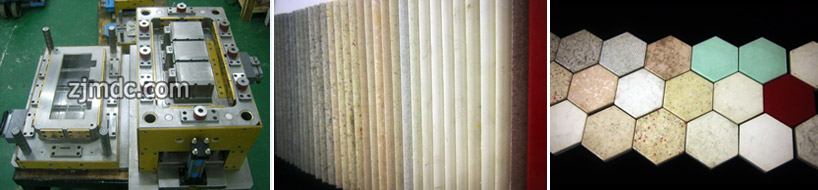
Choosing the right BMC mold manufacturer is essential for achieving stable production, consistent product quality, and long-term manufacturing efficiency. A successful BMC tooling project requires not only machining capability but also deep understanding of compression molding processes and composite material behavior.
MDC provides customized BMC mold solutions by combining engineering experience, advanced manufacturing equipment, and strict quality control systems. From initial product analysis to final trial molding, every stage is carefully managed to ensure reliable tooling performance.
Our engineering team analyzes product structure, material characteristics, molding conditions, and production requirements before creating the mold design. This approach helps identify potential issues early and improves overall project efficiency.
MDC uses modern CNC machining technology, precision EDM, grinding equipment, and professional polishing processes to manufacture high-quality BMC tooling with excellent dimensional accuracy and surface performance.
Understanding the relationship between material behavior and tooling design is critical for BMC molding success. MDC combines mold manufacturing experience with compression molding knowledge to develop practical and production-ready solutions.
Every BMC tool undergoes inspection and verification throughout manufacturing. Dimensional checks, assembly inspection, and trial molding validation help ensure that the final tooling meets customer expectations.
Different industries have different requirements for BMC products. MDC provides customized tooling solutions according to:
Whether for electrical components, automotive parts, industrial products, or advanced composite applications, MDC delivers reliable BMC mold solutions designed for efficient mass production.
Selecting a BMC tooling supplier is a long-term manufacturing decision. The lowest initial tooling cost does not always represent the lowest total production cost. Mold accuracy, durability, maintenance requirements, and production stability all influence the final manufacturing result.
When evaluating a BMC mold manufacturer, customers should consider the following factors:
A professional tooling partner can help optimize mold design, reduce production risks, and improve the overall efficiency of BMC component manufacturing.
A BMC mold is a precision compression molding tool designed specifically for processing Bulk Molding Compound materials. It forms composite parts under controlled heat and pressure while maintaining accurate dimensions, stable curing conditions, and consistent production quality.
BMC tooling is used to manufacture composite components requiring high strength, electrical insulation, heat resistance, and dimensional stability. Typical applications include electrical housings, automotive components, industrial parts, and EV-related composite products.
BMC molding works by placing Bulk Molding Compound material into a heated mold cavity and applying controlled pressure. The material flows inside the cavity, fills the required geometry, and cures into a rigid composite component.
The quality of the final product depends on mold precision, temperature control, pressure distribution, material preparation, and curing parameters.
BMC molding uses Bulk Molding Compound in a bulk or dough-like form, making it suitable for complex-shaped components requiring excellent filling capability. SMC molding uses Sheet Molding Compound and is commonly applied to larger structural parts such as automotive panels.
Although both processes use compression molding technology, BMC and SMC molds require different design considerations based on material flow behavior and product requirements.
Common materials used for BMC molds include P20, 718, H13, and S136 tool steels. The final material selection depends on production volume, operating temperature, surface requirements, and expected mold service life.
The service life of a BMC mold depends on mold material, heat treatment quality, production conditions, maintenance practices, and molding parameters. A properly designed and manufactured BMC tool can support long-term production with thousands or even hundreds of thousands of molding cycles.
Temperature control directly affects resin curing, dimensional stability, surface quality, and production efficiency. Uneven mold temperatures may cause incomplete curing, warpage, inconsistent mechanical properties, and higher rejection rates.
BMC molding defects can be reduced through optimized mold design, proper venting, accurate heating control, correct material loading, stable molding parameters, and regular tooling maintenance.
Yes. MDC provides customized BMC mold solutions based on product design, material specifications, production requirements, press conditions, and quality standards. Our engineering team supports customers from initial design analysis through final mold validation.
MDC combines composite tooling experience, precision machining capability, compression molding knowledge, and strict quality control to deliver reliable BMC molds for automotive, electrical, industrial, and advanced composite applications.
BMC molding continues to play an important role in modern manufacturing because it provides an efficient solution for producing high-performance composite components with excellent strength, electrical insulation, heat resistance, and dimensional stability.
However, successful BMC production depends heavily on the quality of the tooling. A precision-engineered BMC mold ensures accurate cavity geometry, stable material flow, uniform curing, reliable demolding, and consistent product performance throughout long production cycles.
From BMC mold design and material selection to precision machining, surface finishing, trial molding, and quality verification, every stage of tooling development influences final manufacturing results.
With extensive experience in compression molding and composite tooling, MDC provides customized BMC mould and BMC tooling solutions for customers worldwide. By combining engineering expertise, advanced manufacturing technology, and strict quality management, MDC helps manufacturers achieve efficient production and reliable composite components.
Whether you need BMC tools for electrical components, automotive applications, industrial products, or new composite developments, MDC is committed to delivering high-quality tooling solutions engineered for precision, durability, and long-term performance.
Contact US
Email: master@zjmdc.com
Tel: +86 576 84616076
Fax: +86 576 84616079
Mobile: +86 13906573507(Mr. Wang)
Address: No.116 mochuang road, Huangyan Xinqian street,Taizhou,Zhejiang,China