
Specialize in Compression molds
Specialize in Compression molds
Modern manufacturing depends on precision tooling to produce components with consistent dimensions, reliable mechanical performance, and high production efficiency. Among the various types of industrial tooling, the press tool plays a critical role in shaping materials through controlled pressure, making it an indispensable solution for industries ranging from automotive and electrical equipment to aerospace and advanced composite manufacturing.
Although the term press tool is often associated with sheet metal stamping, it also encompasses tooling used in compression molding, composite manufacturing, and thermoset material processing. As lightweight materials such as SMC, BMC, carbon fiber, and glass fiber reinforced composites become increasingly important, precision-engineered press tools are essential for producing high-performance parts with excellent dimensional accuracy and surface quality.
This guide explores the fundamentals of press tool design, manufacturing technologies, tooling materials, production processes, common applications, and the engineering principles behind high-quality composite press tooling. Whether you are developing a new product or selecting a reliable tooling partner, understanding these factors will help improve manufacturing efficiency and long-term production reliability.
A press tool is a precision-engineered device that forms, shapes, compresses, or cuts materials by applying controlled force through a mechanical or hydraulic press. The tool determines the final geometry, dimensional accuracy, surface finish, and repeatability of every manufactured component.
Depending on the production process, press tools can be designed for metal forming, composite compression molding, thermoset processing, or other specialized manufacturing operations. While their applications differ, all press tools share the same objective: converting raw materials into finished products with high precision and consistent quality.
For composite manufacturing, press tools are commonly used to mold Sheet Molding Compound (SMC), Bulk Molding Compound (BMC), carbon fiber prepregs, and other fiber-reinforced materials under carefully controlled temperature and pressure conditions.
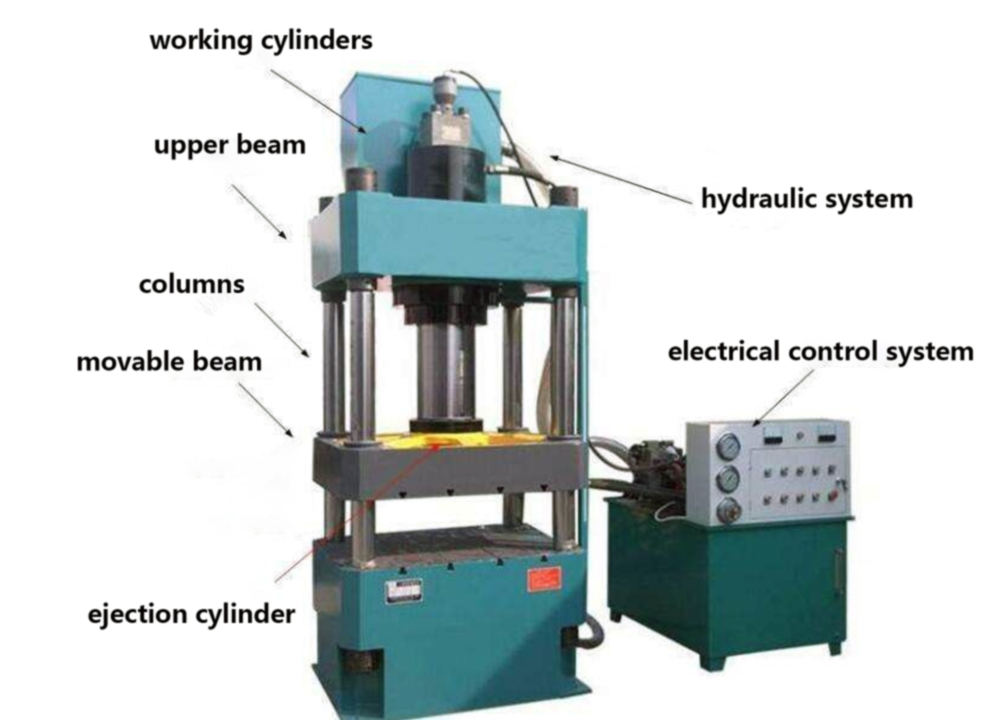
The operation of a press tool follows a systematic manufacturing sequence in which raw material is positioned inside the tool cavity before pressure is applied by the press machine. During the forming cycle, the tool controls material flow, maintains dimensional accuracy, and ensures consistent product quality.
Every stage of this process influences product consistency. Accurate tool alignment, balanced pressure distribution, controlled temperature, and reliable venting all contribute to producing defect-free components with stable mechanical properties.
Press tools can be classified according to their manufacturing processes and intended applications. Selecting the appropriate tooling solution depends on the material being processed, production volume, product complexity, and required dimensional accuracy.
| Press Tool Type | Main Function | Typical Applications |
|---|---|---|
| Compression Press Tool | Forms composite materials under heat and pressure | SMC, BMC, carbon fiber, FRP components |
| Stamping Press Tool | Cuts and forms sheet metal | Automotive metal parts and electrical components |
| Progressive Press Tool | Performs multiple operations in one production cycle | High-volume precision metal components |
| Transfer Press Tool | Moves parts automatically between forming stations | Complex metal products |
| Composite Press Tool | Molds advanced composite materials | Lightweight structural components |
Although different tooling systems serve different manufacturing sectors, composite compression press tools have become increasingly important as industries adopt lightweight materials to improve product performance and reduce energy consumption.
Among all categories of press tooling, compression press tools are particularly important in composite manufacturing. They are designed to shape fiber-reinforced materials by applying precisely controlled pressure and temperature, allowing thermosetting resins to cure into rigid structural components.
Compared with conventional metal forming, compression molding requires careful control of resin flow, fiber distribution, venting, heating balance, and curing cycles. Consequently, the engineering quality of the press tool has a direct impact on product strength, appearance, dimensional stability, and production efficiency.
Compression press tools are widely used for manufacturing automotive battery covers, electrical enclosures, truck body panels, sanitary ware, industrial housings, railway interior components, and many other advanced composite products.
An excellent press tool is not defined solely by machining accuracy. Successful tooling design requires a comprehensive understanding of material behavior, pressure distribution, thermal expansion, resin flow, structural rigidity, and long-term production stability. Every engineering decision made during the design stage directly affects cycle time, product quality, maintenance costs, and mold service life.
For composite compression molding, press tool design becomes even more critical because thermosetting materials must flow, consolidate, and cure simultaneously inside a closed mold cavity. Poor tooling design cannot be compensated for by simply increasing molding pressure or extending curing time.
Uniform pressure ensures that composite materials flow evenly throughout the cavity. Uneven pressure distribution may lead to incomplete filling, thickness variation, resin-rich areas, excessive flash, or localized fiber distortion. Proper cavity design and platen parallelism help maintain consistent pressure across the entire molding surface.
Temperature consistency is one of the most important factors in compression molding. Different curing rates across the mold surface can create residual stress, dimensional instability, and inconsistent mechanical performance. Heating channels should therefore be arranged to minimize temperature variation and ensure uniform curing throughout the part.
Large composite molds are subjected to significant clamping forces during production. Insufficient mold rigidity may result in deformation, cavity misalignment, excessive wear, and poor repeatability. Finite element analysis (FEA) is often used during mold development to optimize structural strength while controlling overall tool weight.
Air and volatile gases generated during molding must escape efficiently from the cavity. Proper venting reduces voids, pinholes, burn marks, and incomplete filling while improving laminate consolidation and surface finish.
Well-designed draft angles, ejector systems, and parting lines minimize demolding resistance and protect finished components from surface damage. Reliable demolding also shortens production cycles and extends mold service life.
Selecting the appropriate tooling material is essential for achieving long-term production stability. Different tool steels provide different combinations of hardness, toughness, thermal conductivity, polishability, and wear resistance. Material selection should always match the expected production volume and molding conditions.
| Material | Main Characteristics | Typical Applications |
|---|---|---|
| P20 | Good machinability and economical cost | Prototype tooling and medium-volume production |
| 718 | Higher hardness and improved polishing performance | Automotive composite molds |
| H13 | Excellent hot-strength and thermal fatigue resistance | High-temperature compression molds |
| S136 | Superior corrosion resistance and mirror finish capability | High-gloss composite products |
Beyond material selection, heat treatment also plays a significant role in determining tool performance. Proper hardening and tempering improve wear resistance, reduce distortion during production, and extend the operational life of the press tool.
A well-designed heating system is fundamental to successful composite molding. It determines how efficiently heat is transferred into the material and directly affects resin flow, curing speed, dimensional stability, and surface quality.
Uneven temperature distribution often results in inconsistent curing. Some areas of the part may become over-cured while others remain under-cured, leading to warpage, residual stress, or reduced mechanical properties.
Modern composite press tools commonly use cartridge heaters, electric heating plates, thermal oil circulation, or steam heating, depending on production requirements. Regardless of the heating method, maintaining consistent mold surface temperature is the primary objective.
Effective venting is often underestimated during mold design, yet it plays a crucial role in composite part quality. During compression molding, trapped air and volatile gases generated by the resin system must escape from the mold cavity before curing is completed.
Poor venting can create defects such as trapped air pockets, porosity, pinholes, incomplete filling, and excessive flash. These defects not only reduce product appearance but may also compromise structural integrity.
Engineers optimize vent locations according to part geometry, material flow direction, and cavity filling characteristics. Proper vent dimensions allow gases to escape while preventing excessive resin leakage.
Manufacturing a high-quality press tool involves far more than machining steel blocks. Each production stage contributes to the final accuracy, durability, and reliability of the tooling.
Strict quality control throughout every manufacturing stage helps ensure that the finished press tool delivers consistent performance during long production runs while minimizing maintenance requirements.
The manufacturing accuracy of a press tool directly determines the dimensional consistency of molded products. High-speed CNC machining, precision EDM, grinding, and coordinate measuring inspection work together to produce tooling capable of meeting demanding industrial tolerances.
Quality control should not be limited to the final inspection. Instead, dimensional verification throughout the machining process allows deviations to be detected early, reducing rework and improving manufacturing efficiency.
Before delivery, comprehensive trial pressing verifies cavity accuracy, product appearance, assembly performance, and molding consistency. This validation process helps customers begin production with greater confidence while minimizing commissioning time.
Even a well-designed press tool may experience quality issues if tooling design, machining accuracy, process parameters, or maintenance are not properly controlled. Understanding the root causes of these problems helps manufacturers improve production stability, reduce downtime, and extend tool service life.
Rather than treating symptoms after defects occur, experienced tooling engineers focus on eliminating potential problems during the design and manufacturing stages. Proper material selection, balanced heating, accurate machining, and preventive maintenance all contribute to long-term production reliability.
| Problem | Possible Cause | Recommended Solution |
|---|---|---|
| Excessive Flash | Poor mold sealing, insufficient clamping force, or worn parting surfaces | Improve machining accuracy, repair sealing surfaces, and optimize pressing force. |
| Uneven Product Thickness | Unbalanced pressure distribution or mold misalignment | Verify mold parallelism and optimize cavity structure. |
| Surface Defects | Poor polishing, trapped air, or contaminated mold surfaces | Improve polishing quality, optimize venting, and maintain clean tooling surfaces. |
| Incomplete Filling | Insufficient material flow, low molding temperature, or inadequate pressure | Adjust molding parameters and optimize runner or cavity design where applicable. |
| Premature Tool Wear | Improper tool steel selection or inadequate heat treatment | Select suitable tool steel and apply appropriate hardening processes. |
| Difficult Demolding | Insufficient draft angle or poor ejector design | Optimize draft angles, ejector locations, and surface finishing. |
| Thermal Cracking | Repeated heating and cooling cycles creating thermal fatigue | Use heat-resistant tool steel and maintain uniform mold temperature. |
Many of these issues can be prevented before production begins. Early engineering review and proper process validation significantly reduce maintenance costs while improving overall manufacturing efficiency.
Press tools are widely used across modern manufacturing industries because they enable high-volume production with excellent repeatability and dimensional accuracy. As lightweight materials continue replacing traditional metals, composite press tools have become increasingly important in advanced industrial applications.
Automotive manufacturers use press tools to produce structural components, exterior body panels, battery enclosures, electrical housings, and lightweight composite assemblies. Compression press tools are particularly suitable for SMC and carbon fiber parts that require high strength and reduced vehicle weight.
SMC and BMC press tools are widely used to manufacture electrical enclosures, meter boxes, switchgear housings, transformer components, cable protection systems, and other insulation products that require excellent electrical performance and corrosion resistance.
Composite press tools support the production of bathroom products, wall panels, decorative ceilings, water tanks, manhole covers, and architectural components that combine durability with low maintenance requirements.
Railway manufacturers increasingly adopt composite materials to reduce vehicle weight and improve energy efficiency. Press tools are used to produce interior panels, equipment housings, seat structures, roof components, and various structural parts for modern rail systems.
Composite press tooling is also applied in wind power, solar energy, hydrogen infrastructure, and other renewable energy industries where corrosion resistance, dimensional stability, and lightweight construction are essential.
Industrial machinery manufacturers use precision press tools to produce equipment covers, machine housings, automation system components, and structural composite parts designed for demanding operating environments.
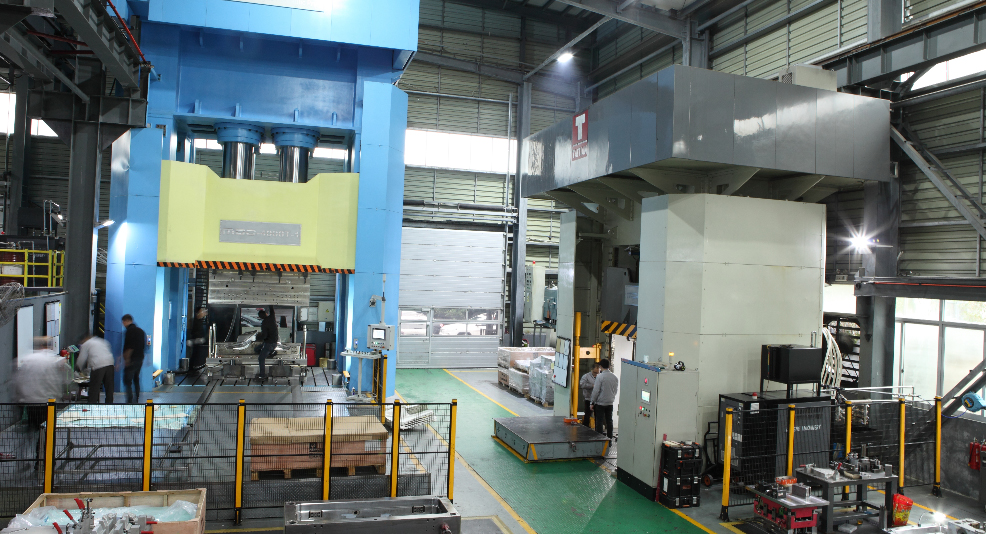
Many manufacturers evaluate tooling primarily based on purchase price. However, the true value of a high-quality press tool becomes evident throughout its production life. A precision-engineered tool reduces scrap rates, shortens cycle times, minimizes maintenance, and improves overall equipment effectiveness (OEE).
Although the initial investment may be higher, well-designed tooling often delivers significantly lower manufacturing costs over thousands of production cycles through improved stability and reduced downtime.
For manufacturers producing high-volume composite components, tooling quality directly influences profitability, customer satisfaction, and long-term production competitiveness.
MDC specializes in designing and manufacturing precision press tools for composite molding applications. With extensive experience in SMC, BMC, carbon fiber, and other advanced composite materials, our engineering team develops tooling solutions that balance precision, durability, and production efficiency.
Every project begins with a thorough review of the customer's product design, material selection, production targets, and molding process. This engineering-first approach helps identify potential risks early and supports efficient mold development from concept to mass production.
Our manufacturing capabilities include high-speed CNC machining, EDM, precision grinding, mirror polishing, mold assembly, trial molding, and comprehensive dimensional inspection. Strict quality control is maintained throughout every stage to ensure reliable tooling performance and long service life.
Whether your project involves automotive lightweight structures, electrical insulation products, industrial composite components, or customized molding solutions, MDC is committed to delivering press tools that support consistent quality and efficient manufacturing.
The terms press tool and mold are sometimes used interchangeably, but they do not always describe the same type of tooling. Understanding the difference is important when selecting a manufacturing process or communicating technical requirements with suppliers.
A press tool is a broader term that refers to tooling installed in a press machine to shape, form, compress, or cut materials. Depending on the manufacturing process, a press tool may be designed for metal stamping, blanking, punching, bending, or composite compression molding.
A mold, on the other hand, is specifically designed to create the final shape of a product by forming material inside a cavity. Molds are commonly used for injection molding, compression molding, transfer molding, resin transfer molding (RTM), and other composite manufacturing processes.
| Comparison Item | Press Tool | Mold |
|---|---|---|
| Main Purpose | Forming, cutting, bending or compressing materials | Creating a finished product inside a mold cavity |
| Typical Materials | Metal sheet, composites, thermoset materials | Plastic, rubber, composites, thermosets |
| Manufacturing Process | Press forming | Molding process |
| Equipment | Mechanical or hydraulic press | Injection machine, compression press, RTM equipment |
| Typical Industries | Metalworking and composite manufacturing | Plastic, rubber and composite manufacturing |
For composite manufacturing, the distinction becomes less obvious because a compression mold is installed in a hydraulic press and therefore also functions as a composite press tool. In practice, manufacturers often use both terms depending on industry conventions and regional preferences.
Selecting a press tool supplier involves much more than comparing quotations. The performance of the tooling directly influences production efficiency, product quality, maintenance requirements, and the overall cost of manufacturing throughout the life of the project.
Before placing an order, manufacturers should evaluate both the technical capabilities and the engineering support offered by the tooling supplier.
A qualified manufacturer should understand not only tool manufacturing but also material behavior, molding processes, and production optimization. Early engineering support often helps eliminate potential manufacturing problems before machining begins.
Modern CNC machining centers, EDM equipment, precision grinding machines, and coordinate measuring systems enable higher machining accuracy and better tooling consistency. Advanced equipment also improves production efficiency and reduces lead time.
Reliable quality management includes incoming material inspection, in-process dimensional verification, assembly inspection, trial molding, and final acceptance testing. Consistent inspection procedures ensure that every tool meets customer specifications before shipment.
An experienced tooling partner should provide support throughout the project, including DFM analysis, tooling optimization, production trials, technical documentation, and after-sales assistance. Continuous engineering communication helps customers achieve stable production more quickly.
A press tool is a precision tool used with a mechanical or hydraulic press to form, shape, compress, or cut materials into finished components. Depending on the application, it may be designed for metal forming or composite molding.
A press tool is a general term covering tooling used in press machines, while a mold specifically forms materials inside a cavity. In composite manufacturing, a compression mold is also considered a type of press tool.
Common tooling materials include P20, 718, H13, and S136 tool steels, as well as aluminum alloys for prototype tooling. Material selection depends on production volume, operating temperature, and required service life.
A balanced heating system ensures uniform resin curing, reduces residual stress, improves dimensional accuracy, and shortens production cycles during composite molding.
Tool life depends on tooling material, heat treatment, maintenance, production conditions, and manufacturing quality. Properly maintained steel tools can remain productive through many thousands of production cycles.
Yes. Press tools are commonly customized according to part geometry, production volume, material type, surface finish requirements, and customer-specific manufacturing processes.
Composite press tools are widely used in automotive, electrical infrastructure, aerospace, railway transportation, renewable energy, sanitary ware, industrial equipment, and construction industries.
Engineering capability, machining accuracy, tooling materials, quality management, project experience, trial molding capability, and technical support are all important factors when selecting a reliable tooling manufacturer.
Press tools are fundamental to modern manufacturing, enabling the efficient production of high-quality components with excellent dimensional consistency and repeatability. As industries continue to adopt lightweight composite materials, precision press tooling has become increasingly important for achieving stable production, shorter cycle times, and superior product performance.
For composite applications, successful tooling requires far more than precision machining. It depends on optimized structural design, balanced heating systems, effective venting, appropriate tool steel selection, and comprehensive engineering expertise. Every aspect of tool development contributes to manufacturing efficiency and long-term production reliability.
With extensive experience in compression molds and composite press tools, MDC provides customized tooling solutions for SMC, BMC, carbon fiber, and other advanced composite materials. From initial engineering consultation and DFM analysis to precision machining, trial molding, and technical support, MDC is committed to helping customers improve manufacturing performance through reliable, high-quality press tooling solutions.
Contact US
Email: master@zjmdc.com
Tel: +86 576 84616076
Fax: +86 576 84616079
Mobile: +86 13906573507(Mr. Wang)
Address: No.116 mochuang road, Huangyan Xinqian street,Taizhou,Zhejiang,China