
Specialize in Compression molds
Specialize in Compression molds
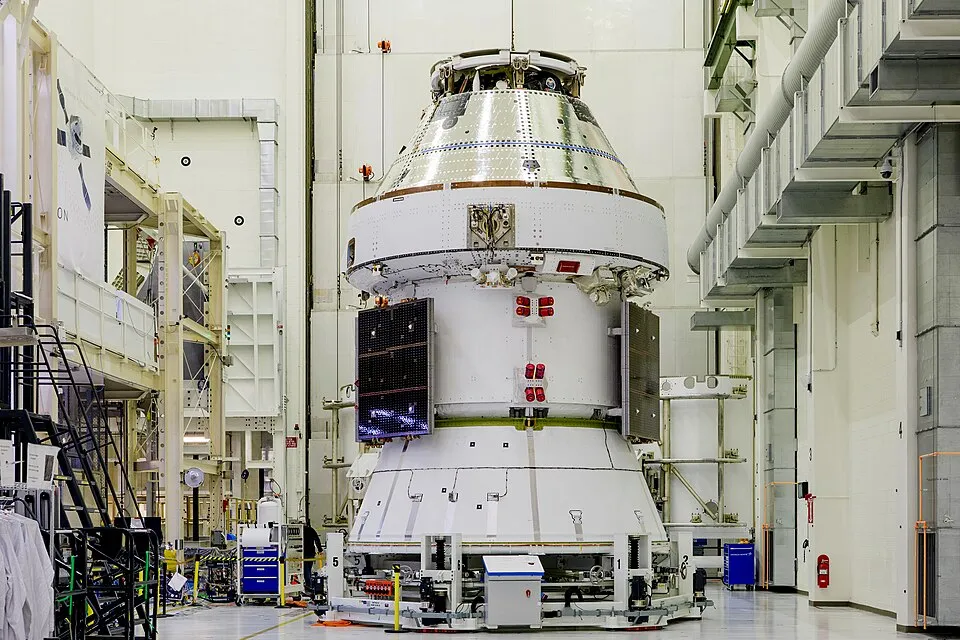
The successful advancement of the Artemis II mission by NASA marks a new era in human space exploration. As the first crewed mission to orbit the Moon in over 50 years, Artemis II is not only a milestone in aerospace engineering but also a powerful signal of technological evolution across the entire manufacturing ecosystem.
Behind every aerospace breakthrough lies a foundation of high-precision tooling, advanced composite molds, and sophisticated manufacturing processes. For companies like Zhejiang MDC Mould Co., Ltd. (MDC Mould), the rapid development of aerospace technologies is creating unprecedented opportunities and technical demands in the field of composite mold manufacturing.
This article explores how aerospace programs such as Artemis II are reshaping the requirements for SMC molds, compression molds, and composite tooling, and how advanced mold manufacturers are adapting to meet the stringent standards of the aerospace industry.
Modern aerospace systems rely heavily on lightweight, high-strength composite materials to achieve performance, fuel efficiency, and structural integrity. In missions like Artemis II, components must withstand:
To meet these requirements, aerospace manufacturers increasingly utilize:
These materials require highly specialized composite molds and compression tooling to ensure dimensional accuracy, surface quality, and repeatability.
In aerospace applications, the margin for error is virtually zero. Every component must meet strict tolerances and performance standards. This makes high-precision mold design and manufacturing a critical factor in the success of aerospace programs.
Key requirements for aerospace-grade molds include:
At MDC Mould, advanced SMC mold and compression tooling solutions are engineered to meet these requirements, supporting industries that demand aerospace-level quality standards.

Compression molding has become one of the most important processes for manufacturing composite aerospace components. It allows for:
In aerospace and related industries, SMC molds, BMC molds, and carbon fiber molds are widely used for:
The same technologies are also increasingly applied in automotive lightweighting, EV battery enclosures, and high-end industrial applications, demonstrating the cross-industry impact of aerospace innovation.
The technological requirements of missions like Artemis II are pushing the entire supply chain—including mold manufacturers—to adopt higher standards in:
At MDC Mould, the integration of high-speed CNC machining, precision polishing, and advanced mold testing systems ensures that every mold meets international quality standards required by demanding industries such as aerospace and automotive.
One of the core objectives of Artemis II and future space missions is weight reduction without compromising strength. This concept is directly influencing mold design and composite manufacturing.
Modern tooling must support:
This requires mold manufacturers to have deep expertise in:
As a professional manufacturer of SMC molds, compression molds, and composite tooling, MDC Mould is positioned at the forefront of this technological transformation.
With extensive experience in:
MDC Mould applies aerospace-level precision and engineering principles to deliver:
Looking ahead, the continued development of space exploration programs such as Artemis II will accelerate innovation in:
Mold manufacturers who invest in these technologies will be better positioned to support the next generation of aerospace and high-performance industrial applications.
From the launchpad of Artemis II to the precision workshops of advanced mold manufacturers, aerospace innovation is transforming the way high-performance components are designed and produced.
For companies like MDC Mould, this represents not only a challenge but also a significant opportunity—to deliver world-class composite molds, SMC tooling, and compression mold solutions that meet the evolving demands of global industries.
As aerospace technology continues to push the boundaries of engineering, the role of precision mold manufacturing will remain a cornerstone of innovation, enabling the future of lightweight, high-strength, and high-efficiency composite structures.
A high-precision mold used to manufacture composite aerospace components.
It ensures high strength, consistency, and efficiency.
Carbon fiber, glass fiber, SMC, and BMC.
Contact US
Email: master@zjmdc.com
Tel: +86 576 84616076
Fax: +86 576 84616079
Mobile: +86 13906573507(Mr. Wang)
Address: No.116 mochuang road, Huangyan Xinqian street,Taizhou,Zhejiang,China