
Specialize in Compression molds
Specialize in Compression molds
As global industries move toward lightweight engineering, structural integration, and high-efficiency production, the importance of composite mold construction continues to grow. From automotive lightweight components to FRP water tanks and electrical enclosures, high-performance composite molds are the foundation of consistent product quality and scalable manufacturing.
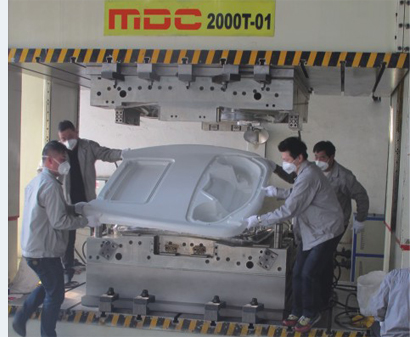
At MDC, advanced expertise in SMC mold, BMC mold, compression mold, and carbon fiber mold manufacturing ensures precision, durability, and optimized production performance. This guide provides a comprehensive overview of composite mold design, material selection, construction processes, and industry applications.
A composite mold is a specialized tooling system designed to shape composite materials such as SMC (Sheet Molding Compound), BMC (Bulk Molding Compound), GMT, LFT, and carbon fiber composites under controlled heat, pressure, and curing conditions.
Unlike traditional metal forming tools, composite tooling must consider resin flow behavior, fiber orientation, curing kinetics, and thermal expansion, making its engineering process more complex and highly specialized.

The compression mold is widely used for SMC and BMC molding. It delivers high strength, excellent surface finish, and repeatability, making it ideal for automotive exterior panels and structural components.
RTM molds are closed systems where resin is injected into dry fiber preforms, ensuring high dimensional accuracy and smooth surface quality.
Thermoforming molds are designed for thermoplastic composites such as GMT and LFT, offering fast production cycles and cost efficiency.
These molds are used in high-performance applications requiring high temperature and pressure resistance, particularly in aerospace and premium automotive components.
Material selection directly affects tool life, surface quality, cycle time, and overall production cost.
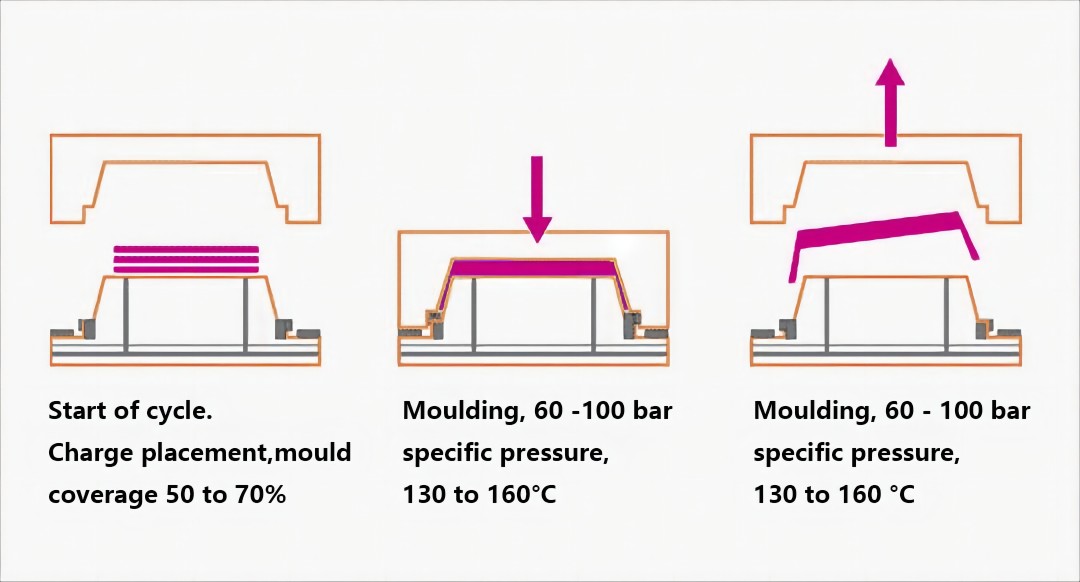
Advanced engineering includes:
High-precision 5-axis CNC machining ensures accurate reproduction of complex geometries and tight tolerances.
Improves hardness, wear resistance, and dimensional stability of the mold.
Includes polishing, coating, and texturing to achieve Class-A surface quality.
Final assembly integrates heating systems, cooling channels, and ejector mechanisms, followed by mold trials and validation.
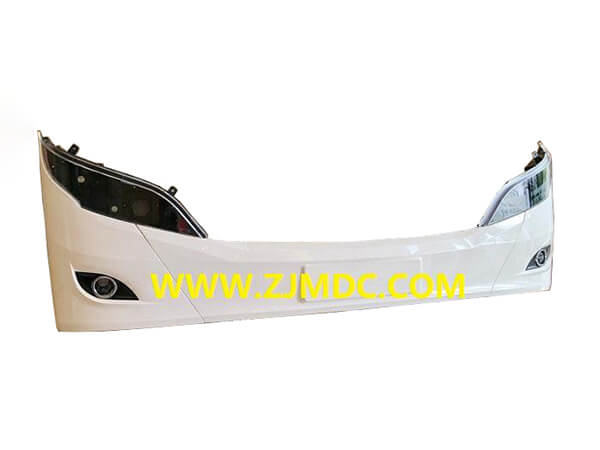
Composite mold construction is a core technology enabling modern composite manufacturing. From SMC mold and BMC tooling to advanced carbon fiber mold systems, high-quality tooling determines product performance, efficiency, and long-term competitiveness.
At MDC, continuous innovation in composite mold design, precision machining, and advanced tooling engineering ensures reliable solutions for global customers in automotive, construction, and industrial sectors.
Contact US
Email: master@zjmdc.com
Tel: +86 576 84616076
Fax: +86 576 84616079
Mobile: +86 13906573507(Mr. Wang)
Address: No.116 mochuang road, Huangyan Xinqian street,Taizhou,Zhejiang,China