
Specialize in Compression molds
Specialize in Compression molds
As global manufacturing continues to shift toward higher consistency, improved performance, and sustainable material solutions, the comparison between traditional wood processing and composite moulding has become increasingly relevant.
While wood has been used as a structural and decorative material for centuries, modern composite moulding processes enable wood-based materials to achieve a level of precision, durability, and scalability that traditional methods cannot provide.
Wood is a natural, renewable material valued for its availability and aesthetic qualities. It is widely used in furniture, construction, and interior applications. However, from an industrial manufacturing perspective, wood presents several inherent limitations.
These characteristics restrict the use of traditional wood in high-volume, high-precision industrial production.
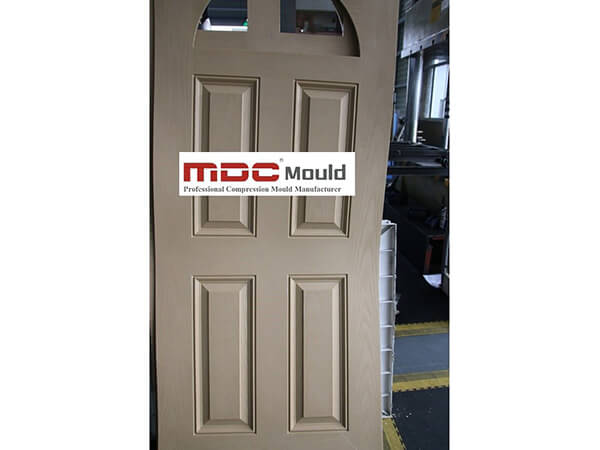
Composite moulding is an advanced manufacturing method in which reinforcement materials and resin systems are shaped under controlled heat and pressure using precision-engineered moulds.
When wood fibers or wood flour are used as reinforcement, the resulting material is known as a wood composite. This approach combines the natural advantages of wood with the engineered performance of composite materials.
The composite moulding process is defined by precise control of material formulation, temperature, pressure, and mould geometry. Compared with traditional woodworking, it delivers repeatable and highly engineered results.
Wood fibers or wood flour are dried and blended with thermoset or thermoplastic resin systems. Additives and coupling agents are used to improve fiber–matrix bonding and processing stability.
The prepared composite material is placed into a mould cavity designed for uniform pressure distribution and optimized material flow.
During mould closing, heat activates resin flow and curing (for thermosets) or melting and consolidation (for thermoplastics). Pressure ensures high density, low void content, and accurate part geometry.
The composite material solidifies under controlled thermal conditions, maintaining dimensional accuracy and surface quality.
Once sufficient strength is achieved, the part is demoulded and may undergo trimming, coating, or surface treatment.
The key differences between wood and composite moulding can be summarized from an engineering perspective:
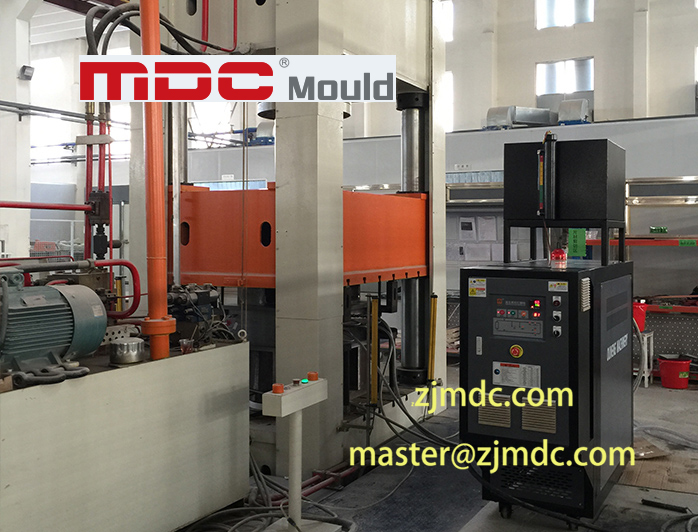
In many industrial sectors, composite moulding is gradually replacing traditional wood processing due to its superior process control and lifecycle performance. Manufacturers benefit from lower rejection rates, reduced post-processing, and improved product reliability.
Wood composite moulding is widely used in:
The success of any composite moulding process depends on high-quality mould design and manufacturing. Precision moulds ensure uniform pressure, controlled resin flow, efficient demoulding, and long tool life.
By combining renewable wood resources with advanced composite moulding technologies, manufacturers can reduce material waste, improve durability, and support sustainable manufacturing strategies.
The comparison of wood vs composite moulding clearly demonstrates the shift from traditional material processing to precision-engineered manufacturing. Through a controlled composite moulding process, wood-based materials can achieve superior performance, stability, and scalability.
For companies focused on advanced composite tooling and moulding technology, wood composite moulding represents a strategic direction for future industrial applications.
Contact US
Email: master@zjmdc.com
Tel: +86 576 84616076
Fax: +86 576 84616079
Mobile: +86 13906573507(Mr. Wang)
Address: No.116 mochuang road, Huangyan Xinqian street,Taizhou,Zhejiang,China