
Specialize in Compression molds
Specialize in Compression molds
Carbon fiber has become a core material in modern high-performance manufacturing due to its exceptional strength-to-weight ratio, corrosion resistance, and structural efficiency. From aerospace and automotive to medical and industrial equipment, carbon fiber parts are increasingly replacing traditional metal components.
However, manufacturing high-quality carbon fiber parts is not only about material selection. It requires a deep understanding of carbon fiber molding processes and the use of precision-engineered carbon fiber molds.
Carbon fiber is a high-strength reinforcement material composed of thin carbon filaments. When combined with thermoset or thermoplastic resin systems, it forms carbon fiber reinforced polymer (CFRP) composites.
Key characteristics of carbon fiber include high stiffness, low density, excellent fatigue resistance, and minimal thermal expansion. These properties enable lightweight structural design but also require strict process control during molding.
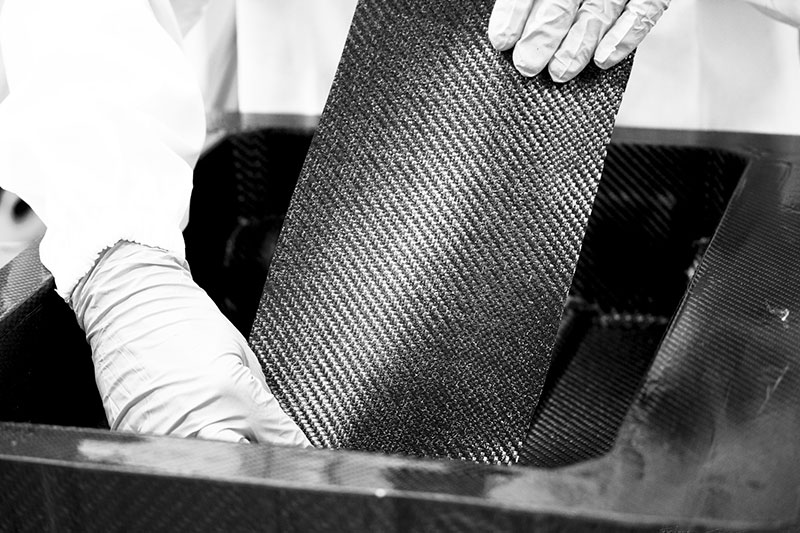
The manufacturing of carbon fiber parts follows a structured and highly controlled process. Each stage directly influences the final mechanical performance and surface quality.
Carbon fiber materials may be supplied as prepregs, dry fabrics, or chopped fiber compounds. Resin systems are selected based on curing temperature, mechanical requirements, and production volume.
Carbon fiber layers or preforms are placed into the mold cavity according to the designed fiber orientation. Proper layup ensures optimized load paths and consistent structural behavior.
During carbon fiber molding, heat and pressure are applied to consolidate the fiber and resin system. This step defines part density, surface finish, and dimensional accuracy.
The composite material is cured under controlled temperature and pressure conditions. After curing, a controlled cooling phase minimizes internal stress and deformation.
Once sufficient strength is achieved, the carbon fiber part is demoulded and may undergo trimming, machining, or surface treatment.
Several carbon fiber molding technologies are commonly used in industrial production:
Compression molding is widely applied for medium- and high-volume production. Prepregs or carbon fiber compounds are shaped in heated molds under high pressure, enabling short cycle times and excellent surface quality.
RTM involves injecting resin into dry carbon fiber preforms inside a closed mold. This method offers good dimensional accuracy and smooth surfaces on both sides of the part.
Vacuum infusion uses negative pressure to draw resin through dry carbon fiber fabrics. It is suitable for large components and lower-volume production.
Autoclave molding provides the highest performance level and is commonly used in aerospace applications. It requires high-temperature carbon fiber molds with excellent thermal stability.
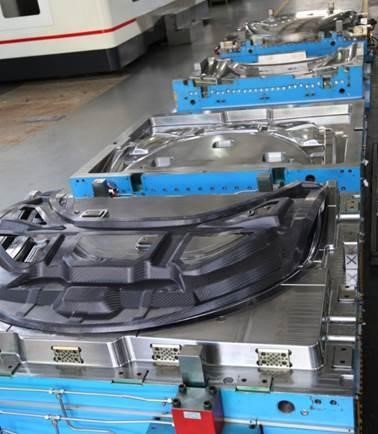
A carbon fiber mold is a precision tool designed to withstand repeated thermal cycles and molding pressure. Mold quality directly affects fiber consolidation, resin flow, and surface finish.
Key mold design factors include material selection, heating method, venting layout, surface treatment, and structural rigidity.
Stable carbon fiber molding relies on precise control of temperature, pressure, resin viscosity, and curing time. Advanced manufacturers use simulation, sensors, and standardized process windows to ensure repeatability.
Quality inspection methods include dimensional measurement, surface inspection, and non-destructive testing.
Modern carbon fiber manufacturing focuses on improving material utilization, reducing cycle time, and enabling recyclable composite systems. Closed-mold and compression molding technologies support sustainable production goals.
Understanding how to manufacture carbon fiber parts requires a comprehensive view of carbon fiber molding technologies and carbon fiber mold design. Precision tooling and controlled processes are essential for producing high-performance composite components.
For manufacturers specializing in composite tooling, carbon fiber molding represents a key capability supporting next-generation lightweight and high-strength industrial applications.
Contact US
Email: master@zjmdc.com
Tel: +86 576 84616076
Fax: +86 576 84616079
Mobile: +86 13906573507(Mr. Wang)
Address: No.116 mochuang road, Huangyan Xinqian street,Taizhou,Zhejiang,China