
Specialize in Compression molds
Specialize in Compression molds
Modern architecture is evolving toward lightweight construction, sustainable materials, industrialized manufacturing, and longer product life cycles. As these trends continue to reshape the global building industry, traditional bathroom products are facing increasing pressure to deliver better structural performance, improved hygiene, easier installation, and lower maintenance costs.
Among today's advanced sanitaryware materials, Sheet Molding Compound (SMC) has become one of the fastest-growing composite materials for manufacturing high-performance bathtubs. Through precision compression molding technology, SMC bathtubs combine outstanding mechanical strength, seamless waterproof construction, excellent thermal insulation, corrosion resistance, and superior dimensional stability into a single integrated product.
Compared with conventional acrylic, ceramic, cultured marble, or cast iron bathtubs, SMC composite bathtubs provide a more balanced combination of lightweight design, structural durability, production efficiency, and long-term reliability. These advantages have made them increasingly popular in hotels, luxury apartments, hospitals, modular buildings, student residences, prefabricated housing, and commercial construction projects worldwide.
As a professional manufacturer specializing in SMC molds, compression molds, and composite tooling solutions, MDC Mould helps customers produce high-quality composite sanitaryware through advanced mold engineering, precision machining, optimized heating systems, and comprehensive technical support.
The global construction industry has experienced significant changes over the past decade. Developers are no longer focused solely on reducing initial procurement costs; they now evaluate bathroom products based on total lifecycle performance, maintenance requirements, installation efficiency, sustainability, and long-term durability.
This shift has accelerated the adoption of advanced composite materials across the sanitaryware sector. Hotels require bathroom fixtures that can withstand thousands of usage cycles while maintaining an attractive appearance. Residential developers seek lightweight products that simplify transportation and installation. Modular building manufacturers need standardized components with excellent dimensional consistency to support factory-based assembly.
SMC composite technology successfully addresses all of these requirements. By combining high-strength glass fibers with thermosetting resin systems, manufacturers can produce sanitaryware products that offer exceptional performance under demanding service conditions.
An SMC bathtub is a composite sanitaryware product manufactured using Sheet Molding Compound (SMC), a fiber-reinforced thermosetting material specifically engineered for structural applications requiring high mechanical performance and excellent surface quality.
Unlike thermoplastic materials that soften repeatedly when heated, SMC undergoes an irreversible curing reaction during compression molding. Once cured, the molecular structure forms a highly cross-linked three-dimensional network that provides outstanding rigidity, dimensional stability, chemical resistance, and heat resistance.
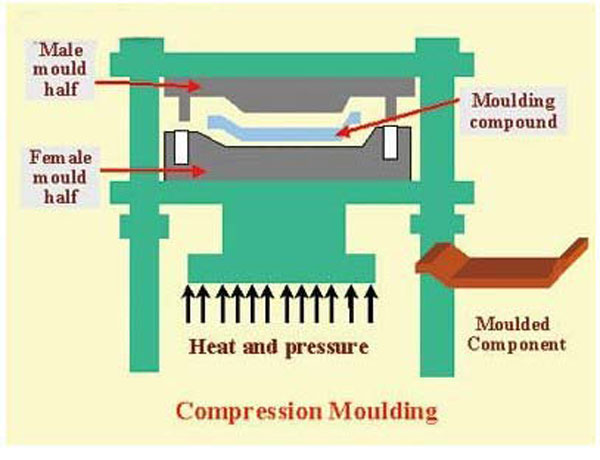
The bathtub is manufactured by placing precisely weighed SMC charges into a heated steel mold. Under carefully controlled temperature and hydraulic pressure, the material flows throughout the mold cavity, encapsulates reinforcement fibers, fills every design feature, and cures into a rigid one-piece structure.
This manufacturing method enables manufacturers to produce bathtubs with highly consistent wall thickness, smooth Class-A surfaces, and integrated structural features that would be difficult or impossible to achieve using conventional fabrication methods.
Sheet Molding Compound is a highly engineered composite material developed to combine the processability of sheet materials with the strength of glass fiber reinforcement. Modern SMC formulations are carefully optimized to balance flow behavior, curing characteristics, surface appearance, and mechanical properties.
A typical SMC formulation contains multiple functional ingredients, each contributing specific performance characteristics.
The resin acts as the primary matrix that binds reinforcement fibers together after curing. Unsaturated polyester resin is commonly used because it provides an excellent balance between mechanical performance, processing efficiency, corrosion resistance, and cost-effectiveness. Vinyl ester resin may also be selected for applications requiring enhanced chemical resistance.
Short chopped glass fibers significantly improve tensile strength, flexural strength, stiffness, and impact resistance. During compression molding, fiber orientation naturally follows material flow patterns, creating an optimized internal reinforcement structure capable of supporting heavy service loads while minimizing product weight.
Carefully selected mineral fillers enhance dimensional stability, reduce material shrinkage during curing, improve surface smoothness, and contribute to overall cost optimization without sacrificing product performance.
Low profile additives minimize curing shrinkage and help produce smooth Class-A cosmetic surfaces that require minimal secondary finishing. This is particularly important for visible bathroom products where aesthetics directly influence customer satisfaction.
Internal mold release systems facilitate clean demolding while protecting both the finished product and the mold surface from unnecessary wear.
Color pigments, UV stabilizers, flame retardants, antimicrobial additives, and other specialty ingredients can be incorporated into the SMC formulation according to the performance requirements of specific projects.
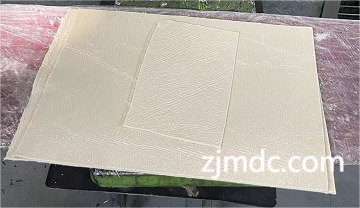
Compression molding remains the preferred manufacturing process for high-quality SMC sanitaryware because it combines excellent production efficiency with superior product consistency.
Unlike hand lay-up processes that depend heavily on operator skill, compression molding is a highly repeatable industrial manufacturing technology. Every production cycle follows carefully controlled processing parameters, including mold temperature, hydraulic pressure, curing time, and material charge weight.
This controlled process minimizes production variation while ensuring each bathtub meets strict dimensional and mechanical specifications.
These characteristics make compression molding particularly attractive for manufacturers supplying large commercial construction projects where product consistency and production capacity are equally important.
Producing a high-quality SMC bathtub involves a series of carefully controlled engineering steps. Every stage influences the final product's mechanical properties, appearance, dimensional accuracy, and service life.
Pre-matured SMC sheets are stored under controlled environmental conditions to maintain stable viscosity and curing characteristics. Before molding, the sheets are cut into precisely calculated charge patterns based on mold geometry and expected material flow.
The precision compression mold is heated to the specified processing temperature using optimized heating channels. Uniform temperature distribution throughout the mold is essential for consistent curing and balanced resin flow.
The SMC charges are strategically positioned inside the mold cavity. Proper charge placement directly influences fiber orientation, flow behavior, weld line formation, and overall mechanical performance.
As the hydraulic press closes, pressure forces the material to flow throughout the cavity. During this stage, the resin encapsulates glass fibers while filling ribs, corners, drain openings, overflow features, and structural reinforcement sections.
Heat initiates the thermosetting reaction. Resin molecules cross-link into a permanent three-dimensional polymer network, transforming the soft composite sheet into a rigid structural component with excellent dimensional stability.
After curing is complete, the mold opens and the finished bathtub is carefully removed. Precision mold design ensures smooth demolding while minimizing stress concentrations that could damage either the product or tooling.
Excess flash is removed using CNC trimming or precision cutting equipment. Drain openings and functional interfaces are machined according to engineering specifications before the bathtub undergoes final inspection.
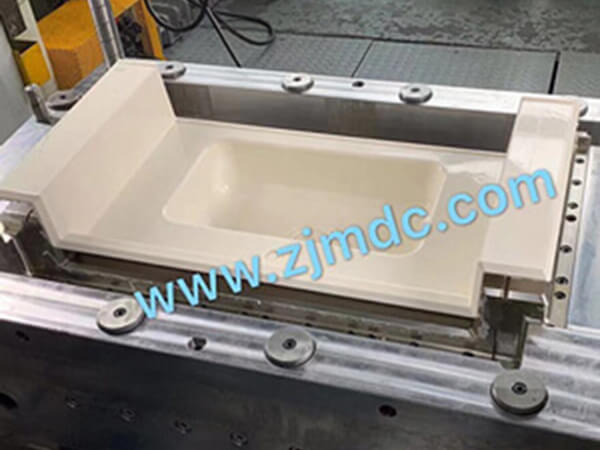
One of the defining advantages of SMC bathtubs is their seamless monolithic construction.
Traditional bathtubs often rely on bonded sections, separate reinforcement components, or assembled structures. These interfaces may gradually become potential leakage paths after years of thermal cycling, mechanical loading, or moisture exposure.
Compression molding eliminates these concerns by producing the bathtub as a single integrated composite structure. Because there are no structural joints, the finished product demonstrates superior waterproof performance, improved rigidity, and significantly reduced maintenance requirements.
This one-piece design also enhances cleaning efficiency by eliminating narrow crevices where moisture, mold, soap residue, or bacteria could accumulate over time.
Selecting the right bathtub material affects not only product appearance but also structural reliability, user comfort, manufacturing efficiency, installation costs, and long-term maintenance. While acrylic, cast iron, ceramic, and cultured marble have been widely used for decades, modern composite engineering has demonstrated that Sheet Molding Compound (SMC) offers a superior balance of performance for today's commercial and residential construction projects.
Unlike conventional materials that typically excel in only one or two performance categories, SMC combines multiple engineering advantages into a single integrated material system. This balanced performance is one of the primary reasons why architects, developers, and sanitaryware manufacturers are increasingly specifying SMC bathtubs for high-end projects worldwide.
Acrylic bathtubs remain one of the most common products in residential markets because of their relatively low manufacturing cost and attractive appearance. However, acrylic is essentially a thermoplastic sheet that must be vacuum formed and reinforced with fiberglass or resin on its backside.
Although this manufacturing method is economical, the final product often exhibits several engineering limitations.
Acrylic itself possesses relatively low stiffness. To improve load-bearing capability, manufacturers usually apply fiberglass reinforcement layers to the rear surface after thermoforming. Since these reinforcing layers are manually applied in many production facilities, quality consistency may vary between products.
In contrast, SMC bathtubs are molded as an integrated composite structure in a single compression molding cycle. Glass fibers are uniformly distributed throughout the entire wall thickness, producing a highly rigid shell capable of supporting heavy loads without excessive deformation.
Repeated loading, accidental impacts, or improper installation may cause acrylic products to develop cracks over time, particularly around unsupported areas.
The glass fiber reinforcement contained throughout an SMC bathtub provides significantly greater impact resistance and fatigue durability, allowing the structure to withstand long-term service under demanding operating conditions.
Thermoplastic acrylic materials exhibit relatively high thermal expansion coefficients. Temperature fluctuations may gradually induce dimensional changes or localized deformation.
The thermosetting polymer matrix used in SMC maintains excellent dimensional stability after curing, making it highly suitable for projects requiring long-term geometric accuracy.
Cast iron bathtubs have traditionally been recognized for their strength and premium feel. However, their significant weight presents numerous engineering and logistical challenges.
A cast iron bathtub may weigh several times more than an equivalent SMC bathtub. The additional weight increases transportation costs, requires heavier lifting equipment, and complicates installation on upper floors or modular building systems.
SMC composite bathtubs dramatically reduce overall product weight while maintaining excellent structural integrity, making them easier to transport, install, and handle throughout the construction process.
Although enamel coatings protect cast iron surfaces, impact damage or coating defects may eventually expose the underlying metal to corrosion.
SMC materials contain no metallic substrate and therefore cannot rust. Even under prolonged exposure to moisture, humidity, or cleaning chemicals, composite structures maintain excellent corrosion resistance.
Metal possesses high thermal conductivity, meaning that cast iron rapidly transfers heat away from bathwater during use.
SMC composites exhibit much lower thermal conductivity, helping maintain water temperature for longer periods while improving bathing comfort and reducing hot water consumption.
Cultured marble products are appreciated for their decorative appearance and stone-like texture. However, they generally contain high filler content, resulting in relatively brittle mechanical behavior.
SMC composites provide substantially higher impact resistance because glass fibers distribute mechanical stresses throughout the structure rather than allowing stress to concentrate within localized regions.
This enhanced toughness significantly reduces the likelihood of cracking during transportation, installation, or long-term service.
One of the defining engineering characteristics of SMC materials is their exceptional strength-to-weight ratio.
The combination of continuous resin matrix and uniformly distributed glass fibers enables engineers to achieve structural performance that would otherwise require considerably thicker or heavier traditional materials.
For modern construction projects, reduced component weight provides multiple benefits:
These advantages become increasingly valuable as modular construction and prefabricated building systems continue expanding worldwide.
Thermal insulation represents one of the most noticeable user benefits of SMC bathtubs.
When hot water contacts a bathtub surface, heat begins transferring from the water into the surrounding material. The rate of heat transfer depends largely on the material's thermal conductivity.
SMC composites possess significantly lower thermal conductivity than metallic materials. As a result, less heat escapes from the bathwater into the bathtub structure, allowing users to enjoy a warmer bathing experience for longer periods.
This characteristic offers several practical advantages:
For hospitality projects involving hundreds of guest rooms, these energy savings can become economically significant over many years of operation.
Bathrooms continuously experience high humidity, standing water, and repeated wet-dry cycles. Under these conditions, waterproof integrity becomes essential for long-term product reliability.
Unlike assembled structures containing mechanical joints or adhesive seams, compression molded SMC bathtubs are manufactured as monolithic components. The absence of structural joints dramatically reduces potential leakage paths.
Furthermore, cured thermosetting resin forms a dense cross-linked polymer network with extremely low water absorption. This stable internal structure prevents moisture penetration that could otherwise compromise long-term dimensional stability.
Maintaining hygiene has become increasingly important in residential, healthcare, hospitality, and public sanitation facilities.
The dense, non-porous surface produced during precision compression molding significantly reduces opportunities for microorganisms to attach and multiply.
Unlike porous materials that may retain moisture beneath the surface, SMC composites present a smooth barrier that can be easily cleaned using common household detergents.
Optional antimicrobial additives may also be incorporated into specialized formulations for hospitals, elderly care facilities, and healthcare environments where enhanced hygiene performance is required.
Bathroom fixtures routinely encounter soaps, shampoos, disinfectants, cleaning agents, cosmetics, and mildly acidic or alkaline chemicals.
Properly formulated SMC materials demonstrate excellent resistance to these commonly encountered substances, minimizing risks of surface degradation, discoloration, or chemical attack.
This chemical stability contributes directly to longer product service life while reducing maintenance requirements throughout the bathtub's operational lifespan.
Many traditional bathroom materials gradually deteriorate under continuous exposure to moisture, temperature fluctuations, ultraviolet radiation, and cleaning chemicals.
SMC composites are specifically engineered to resist these environmental stresses.
Advanced resin formulations combined with UV stabilizers help preserve both mechanical performance and cosmetic appearance throughout years of service.
Under appropriate manufacturing conditions, SMC bathtubs commonly achieve service lives exceeding twenty years while maintaining excellent dimensional stability and structural integrity.
Although Sheet Molding Compound (SMC) provides outstanding material properties, the final quality of an SMC bathtub depends heavily on mold design and manufacturing precision. Even premium composite materials cannot compensate for an improperly engineered compression mold.
The compression mold serves as the foundation of the entire manufacturing process. It controls material flow, fiber orientation, curing uniformity, dimensional accuracy, surface finish, and production efficiency. Every design detail—from heating channels to venting locations—directly influences the performance and appearance of the finished bathtub.
For manufacturers targeting high-end sanitaryware markets, investing in a precision-engineered SMC mold is essential to achieving consistent quality, reducing production defects, and extending mold service life.

Successful mold development starts long before steel is machined. At MDC Mould, every project begins with a detailed Design for Manufacturability (DFM) review. Engineers analyze the customer's CAD model to identify potential molding challenges and optimize the product for compression molding.
Typical engineering considerations include:
Optimizing these features before mold production significantly reduces manufacturing risks while improving productivity and product consistency.
One of the most important factors in SMC compression molding is temperature control. The curing reaction of thermosetting resin is highly sensitive to mold temperature. Even small temperature differences across the mold surface can lead to uneven curing, residual stress, dimensional variation, or cosmetic defects.
Professional compression molds therefore incorporate carefully engineered heating channel systems designed to maintain highly uniform temperature distribution throughout the cavity.
Well-balanced heating provides several important advantages:
For large sanitaryware components such as bathtubs, maintaining stable mold temperature is particularly important because the material must flow over long distances before curing is complete.
During compression molding, SMC material behaves as a highly filled, fiber-reinforced compound. As hydraulic pressure increases, the material flows from the initial charge locations toward every corner of the mold cavity.
The flow behavior determines how glass fibers become oriented inside the finished product. Since fiber orientation directly affects mechanical strength, controlling material flow is one of the most important aspects of mold engineering.
Poor flow design may result in:
By optimizing cavity geometry, charge placement, compression sequence, and runner-free flow paths, engineers can achieve a more balanced fiber distribution throughout the bathtub structure.
Unlike isotropic materials such as cast iron or ceramic, fiber-reinforced composites exhibit directional mechanical properties. The orientation of glass fibers influences tensile strength, bending stiffness, and impact resistance.
Proper mold engineering guides fiber movement so that reinforcement aligns with major load-bearing regions of the bathtub, including the bottom panel, sidewalls, seating areas, and structural ribs.
Optimized fiber orientation improves:
Advanced mold design therefore considers not only cavity shape but also the internal flow behavior of the composite material during every stage of compression.
As the mold closes, trapped air and volatile gases generated during curing must escape from the cavity. If these gases cannot be released efficiently, they may become compressed within the material, creating cosmetic or structural defects.
Typical problems associated with poor venting include:
MDC Mould carefully designs venting systems based on cavity geometry, material flow direction, and expected gas generation. Proper vent placement allows gases to escape while preventing excessive material flash, resulting in smoother surfaces and improved structural integrity.
Consumers often evaluate a bathtub first by its appearance. A smooth, glossy surface not only enhances aesthetics but also simplifies cleaning and improves long-term hygiene.
Achieving a Class-A surface finish requires far more than polishing after production. It begins with precision mold manufacturing.
Critical factors include:
High-quality mold surfaces are faithfully replicated onto the cured SMC product, minimizing secondary finishing while delivering a premium appearance.
One of the major advantages of compression molding is the ability to integrate structural reinforcement directly into the product geometry.
Instead of increasing wall thickness throughout the bathtub, engineers strategically design reinforcing ribs beneath the visible surfaces.
Proper rib design provides:
Finite element analysis (FEA) is often used during product development to determine optimal rib geometry and placement, ensuring that material is used efficiently without compromising structural performance.
Modern modular bathrooms require components that fit together with minimal adjustment during installation. Even small dimensional deviations may complicate assembly, increase labor costs, or delay project schedules.
High-precision compression molds enable manufacturers to achieve excellent repeatability from one production cycle to the next. Stable cavity dimensions, controlled curing, and precision machining ensure that every bathtub meets strict dimensional tolerances.
This consistency is especially valuable for prefabricated bathroom systems, where interchangeable components are essential for efficient factory production.
Production efficiency plays an important role in the economics of sanitaryware manufacturing. However, reducing cycle time should never compromise product quality.
A well-designed compression mold balances heating efficiency, material flow, curing kinetics, and cooling performance to achieve both high productivity and consistent quality.
Optimized mold engineering helps manufacturers:
Through continuous optimization of mold design and processing parameters, manufacturers can maximize productivity while maintaining the high quality expected by global sanitaryware markets.
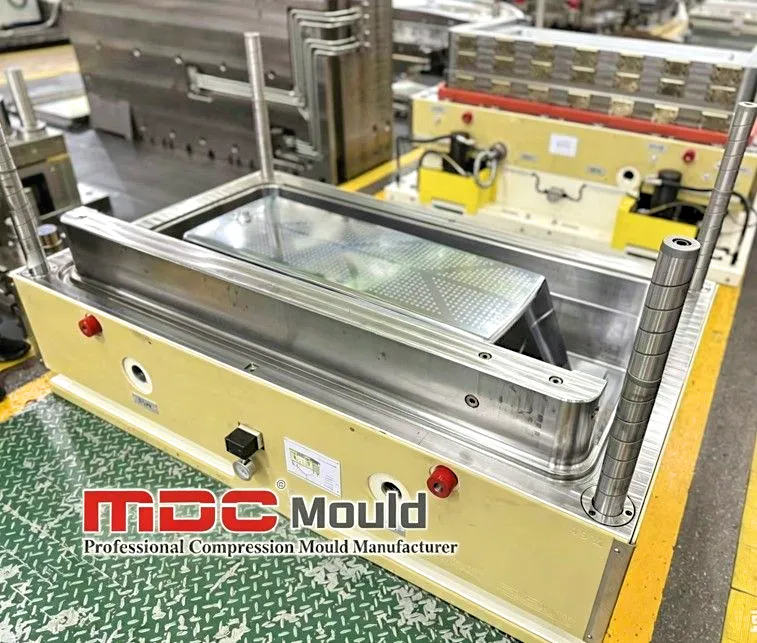
Even with high-quality raw materials and advanced hydraulic presses, the production of SMC bathtubs requires strict control over every stage of the compression molding process. Material formulation, mold design, process parameters, and operator experience all influence the final product quality.
Understanding the root causes of common molding defects enables manufacturers to reduce scrap rates, improve production efficiency, and deliver consistently high-quality composite sanitaryware.
Air entrapment is one of the most common defects encountered during compression molding. As the mold closes, trapped air or gases released during resin curing may become enclosed within the composite if they cannot escape efficiently.
Typical Causes
Engineering Solutions
Effective venting not only improves surface quality but also increases the structural integrity of the finished bathtub.
Flow marks appear as visible streaks or irregular patterns on the finished surface. Although they may not significantly reduce structural strength, they negatively affect cosmetic appearance and customer acceptance.
Main Causes
Recommended Improvements
A smooth, glossy Class-A surface is essential for premium sanitaryware. If glass fibers become exposed on the visible surface, the bathtub loses its aesthetic appeal and becomes more difficult to clean.
Possible Reasons
Preventive Measures
Large sanitaryware products require excellent dimensional stability. Warpage can complicate installation, reduce sealing performance, and increase assembly costs.
Root Causes
Solutions
Flash refers to excess composite material escaping along the mold parting line during compression. Although flash can usually be removed through trimming, excessive flash increases material waste and post-processing costs.
Contributing Factors
Engineering Controls
High-quality sanitaryware requires much more than visual inspection. Each bathtub should undergo systematic quality verification to ensure consistent performance throughout its service life.
A comprehensive inspection program typically includes the following evaluations.
Critical dimensions such as overall length, width, height, drain position, overflow location, and mounting interfaces should be measured using calibrated inspection equipment.
Consistent dimensional accuracy ensures compatibility with standardized plumbing systems and modular bathroom installations.
Inspectors carefully evaluate the visible surface for:
A high-quality Class-A surface reflects the precision of both mold manufacturing and process control.
Because bathtubs must safely support users under repeated loading conditions, structural strength testing is an essential part of quality assurance.
Static and dynamic loading evaluations verify that the bathtub maintains structural integrity without excessive deformation or cracking.
Proper rib design and balanced fiber distribution play important roles in achieving reliable load-bearing performance.
Leakage testing confirms that the integrated one-piece structure maintains complete watertight integrity.
Drain interfaces, overflow systems, and sealing surfaces are also inspected to ensure compatibility with plumbing components during installation.
Transportation, installation, and daily use may expose bathtubs to accidental impacts.
Impact testing verifies that the composite structure can absorb mechanical energy without developing visible cracks or hidden structural damage.
Bathroom products are routinely exposed to detergents, soaps, disinfectants, shampoos, and household cleaning agents.
Chemical resistance testing confirms that prolonged exposure does not cause discoloration, surface degradation, softening, or loss of mechanical properties.
Repeated transitions between hot and cold water create thermal stresses within bathroom fixtures.
Thermal cycling evaluates the bathtub's ability to maintain dimensional stability, surface quality, and structural performance after numerous temperature changes throughout its expected service life.
Consistent product quality is achieved through process control rather than relying solely on final inspection.
Professional SMC bathtub manufacturers establish quality checkpoints throughout the entire production workflow, including:
By monitoring critical process parameters in real time, manufacturers can identify deviations early, reduce production variability, and maintain consistently high product quality.

At MDC Mould, quality begins with precision mold engineering. Every compression mold is designed to deliver stable material flow, balanced temperature distribution, efficient venting, and long-term dimensional accuracy.
Our engineering team works closely with customers throughout the entire project lifecycle—from product development and DFM analysis to mold manufacturing, trial production, process optimization, and after-sales technical support.
By combining advanced CNC machining, precision polishing, optimized heating systems, and extensive experience in composite tooling, MDC Mould helps manufacturers reduce defects, shorten production cycles, and improve the overall competitiveness of their SMC sanitaryware products.
The outstanding mechanical properties, corrosion resistance, hygienic surface, and lightweight construction of SMC bathtubs make them suitable for a wide range of residential, commercial, and industrial applications. As construction methods continue to evolve toward industrialized manufacturing and modular assembly, demand for high-performance composite sanitaryware continues to grow worldwide.
Hotels require bathroom fixtures capable of maintaining their appearance despite continuous daily use by thousands of guests over many years. SMC bathtubs provide excellent impact resistance, stain resistance, and long-term durability while reducing maintenance costs and replacement frequency.
Modern residential developments increasingly prioritize lightweight construction, environmental sustainability, and premium user experience. SMC bathtubs satisfy these requirements by combining elegant appearance with outstanding structural reliability and thermal comfort.
Healthcare environments demand sanitary products that are easy to clean, resistant to microbial growth, and capable of withstanding frequent exposure to disinfectants. The dense, non-porous surface of compression molded SMC products supports high hygiene standards while simplifying routine maintenance.
Factory-built bathrooms require components with excellent dimensional consistency and repeatability. Precision compression molding enables every bathtub to be manufactured within tight tolerances, reducing installation time and improving assembly efficiency during modular construction.
Weight reduction is especially important in yachts, cruise ships, motorhomes, and recreational vehicles. SMC bathtubs combine structural strength with low weight, helping improve transportation efficiency and reduce overall vehicle mass while maintaining excellent corrosion resistance in humid environments.
Sustainability has become a central objective throughout the global construction industry. Architects, developers, and manufacturers increasingly evaluate building materials based on their environmental impact across the entire product lifecycle rather than only their initial manufacturing cost.
SMC composite bathtubs contribute to sustainable construction in several important ways.
By extending product lifespan and reducing resource consumption over decades of operation, SMC sanitaryware supports greener building practices and lower lifecycle costs.
As advanced composite technologies continue to evolve, the future of bathroom manufacturing is expected to emphasize higher automation, improved material performance, and greater production efficiency.
Several industry trends are expected to accelerate the adoption of SMC sanitaryware over the coming years.
Modern hydraulic presses increasingly incorporate digital process monitoring systems capable of recording molding pressure, temperature, curing time, and production data in real time. These systems improve process stability while supporting predictive maintenance and traceable quality control.
Three-dimensional simulation technologies, including mold flow analysis, finite element analysis (FEA), and thermal simulation, allow engineers to optimize mold performance before manufacturing begins. This reduces development time while minimizing costly design modifications during production.
Material suppliers continue to develop new SMC formulations with enhanced fire resistance, lower density, improved UV stability, higher impact resistance, and greater environmental compatibility. These innovations further expand the application range of composite sanitaryware.
Automated material handling, robotic trimming, CNC machining, and intelligent inspection systems are helping manufacturers improve production efficiency while maintaining consistent quality for large-volume sanitaryware production.
Producing premium composite sanitaryware requires far more than a high-quality raw material. Success depends on precision mold engineering, stable manufacturing processes, and extensive experience in compression molding technology.
MDC Mould specializes in the development and manufacture of high-performance compression molds for the composite industry. Our engineering capabilities help customers improve product quality, reduce production costs, and accelerate new product development.
Our advantages include:
From concept development to production optimization, MDC Mould works closely with customers to deliver reliable compression molding solutions for composite sanitaryware, automotive components, electrical enclosures, and other advanced composite applications.
Yes. Because SMC contains glass fiber reinforcement distributed throughout the entire structure, it generally offers higher stiffness, better impact resistance, and improved long-term dimensional stability than conventional acrylic bathtubs.
When manufactured using high-quality materials and precision compression molding, SMC bathtubs can provide a service life exceeding twenty years with minimal maintenance.
No. SMC is a fiber-reinforced composite material containing no metallic substrate, making it naturally resistant to corrosion even in continuously humid environments.
Yes. Properly formulated SMC composites exhibit excellent resistance to common bathroom detergents, disinfectants, shampoos, soaps, and mild cleaning agents.
Compression molding provides excellent dimensional accuracy, consistent fiber distribution, high production efficiency, superior surface quality, and repeatable manufacturing performance, making it the preferred process for premium composite sanitaryware.
Modern SMC formulations can be produced with low-VOC, formaldehyde-free materials. Their long service life and lightweight design also contribute to reduced lifecycle environmental impact.
Key factors include mold material selection, CNC machining accuracy, heating channel layout, venting design, cavity polishing, dimensional precision, and overall engineering optimization.
Yes. MDC Mould provides customized compression mold solutions according to customer drawings, product requirements, production capacity, and project specifications. Our engineering team supports customers from product design optimization through mold manufacturing, mold trials, and mass production.
SMC bathtubs represent the next generation of composite sanitaryware by combining advanced material science with precision compression molding technology. Compared with traditional bathroom materials, SMC provides an outstanding balance of lightweight construction, structural strength, waterproof performance, thermal insulation, corrosion resistance, dimensional stability, and long service life.
However, the performance of an SMC bathtub depends not only on the composite material itself but also on the engineering quality of the compression mold. Professional mold design, optimized heating systems, balanced material flow, efficient venting, and precision manufacturing all play essential roles in producing high-quality sanitaryware with consistent performance.
With extensive experience in SMC mold design and composite compression molding technology, MDC Mould is committed to helping manufacturers worldwide develop reliable, efficient, and cost-effective production solutions for premium composite bathroom products. Whether you are developing a new sanitaryware project or upgrading an existing production line, our engineering team is ready to provide comprehensive support from concept to mass production.
Looking for a trusted partner for high-quality SMC bathtub molds, compression molds, or other composite tooling solutions?
Contact MDC Mould today to discuss your project requirements. Our experienced engineering team is ready to provide customized mold design, manufacturing, technical consultation, and production support to help you achieve outstanding product quality and manufacturing efficiency.
Contact US
Email: master@zjmdc.com
Tel: +86 576 84616076
Fax: +86 576 84616079
Mobile: +86 13906573507(Mr. Wang)
Address: No.116 mochuang road, Huangyan Xinqian street,Taizhou,Zhejiang,China